A plan shaped around your needs.
An impacted tooth is one that has failed to come through into its proper position — trapped beneath gum or bone, or angled against a neighbouring tooth so it cannot erupt. Wisdom teeth are the most common example, but other teeth — particularly upper canines — can also be impacted.
Why impacted teeth can cause problems
A tooth part-way through the gum creates a pocket that traps food and bacteria, causing repeated inflammation around it. A deeply impacted tooth can damage the root of the tooth beside it, develop decay that cannot be treated, or occasionally be associated with cyst formation visible on imaging. Whether a given impacted tooth is likely to cause problems is assessed from its position on the X-ray.
Assessment and planning
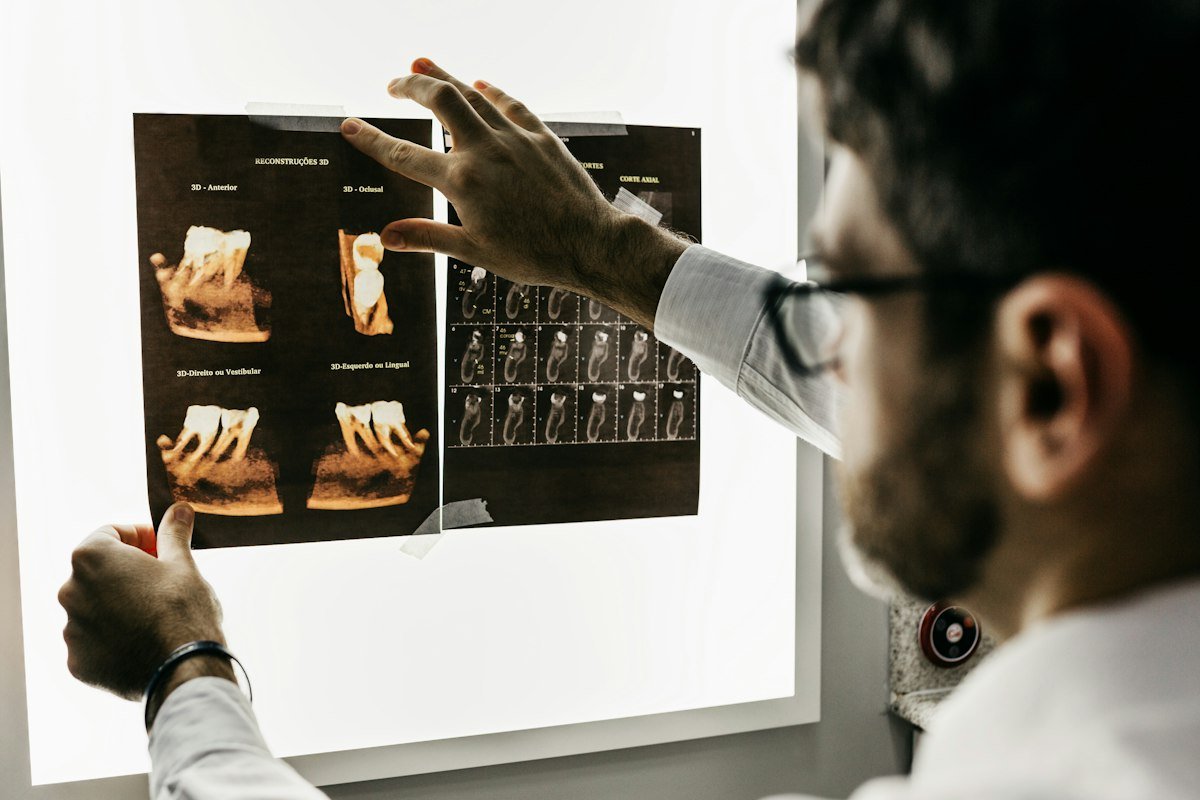
The decision to remove an impacted tooth — or leave it under observation — follows imaging that shows its exact position relative to neighbouring teeth and structures. In some cases the risk of problems is low and monitoring is the sensible course; in others, planned removal prevents problems before they develop.
The procedure and recovery
Removing an impacted tooth is usually surgical — the site is numbed, the tooth is accessed beneath gum and sometimes bone, and it is removed, often in pieces for a gentler extraction. Recovery involves swelling and soreness for several days, managed with the instructions and medication provided.
Who may benefit from this care
- A tooth trapped beneath gum or bone
- Repeated inflammation around a partly erupted tooth
- Imaging showing an impacted tooth affecting a neighbour
- Planned removal before problems develop
Potential benefits to discuss
- Resolves a source of repeated inflammation
- Protects neighbouring teeth from damage
- Prevents complications visible on imaging
- Planned removal rather than emergency treatment
Treatment procedure
Imaging maps the tooth position first. The site is numbed, the tooth accessed surgically — often sectioned for gentler removal — and the site closed. Recovery involves several days of swelling and soreness managed with the guidance given.
Aftercare and follow-up
Follow surgical aftercare: cold compresses, prescribed medication, soft food, gentle cleaning, and clot protection. Attend the review or stitch appointment, and report worsening pain, bad taste, or persistent bleeding.